

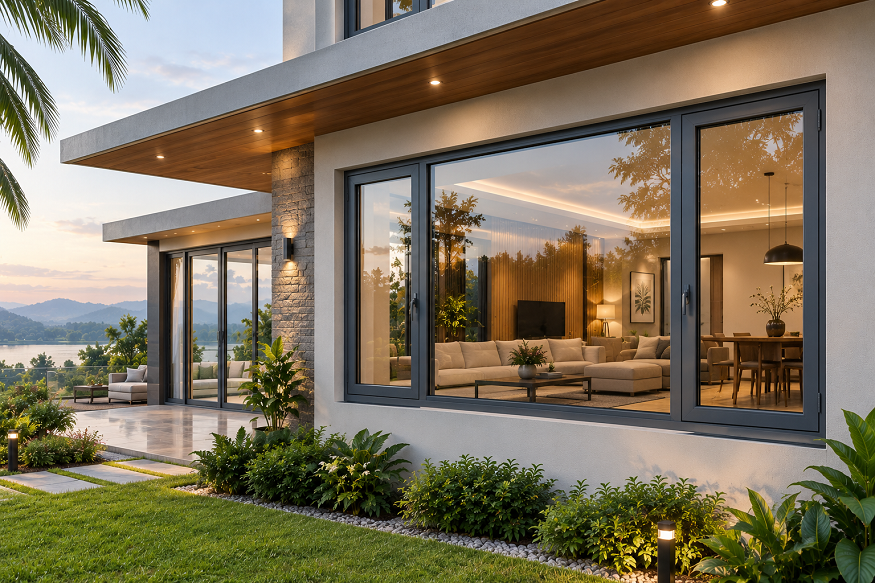
Walk into any newly built apartment or villa today and you’ll notice the windows first. They’re thinner, the glass looks bigger, and the room feels lighter. Most of the time, the reason is premium aluminium windows.
Ten or fifteen years ago, most Indian homes were fitted with heavy timber frames or basic steel sections. They did the job, but they swelled in the monsoon, rusted near the coast, and needed repainting every couple of years. Anyone who has tried to force a stuck wooden window open in July knows the frustration. Aluminium changed that, and it has quietly become the default choice for people building or renovating today.
They aren’t just a style choice, though. Done properly, they affect how your home feels day to day, from the light in the living room to how well the bedroom shuts out street noise. They also influence how much dust gets in during summer, how secure the house feels at night, and how easily you can open a large panel with one hand.
The trouble is that the market is crowded, and two windows that look identical on a showroom wall can behave very differently after a few seasons. Differences in profile thickness, glass, hardware and fitting are easy to miss when you’re comparing quotations side by side. Many homeowners only find out what they paid for once the first monsoon arrives.
Why Choose Premium Aluminium Windows?
A window does a lot more than let light in. It controls ventilation, privacy, security and, honestly, a big part of how your house looks from the street.
Aluminium is strong but light, so manufacturers can make frames much slimmer than old-style timber or steel ones. Slim frames mean more glass, and more glass means more daylight and a better view. A thick frame is like a heavy mat around a photograph. The thinner it is, the more you notice the picture.
What You Actually Get
A clean, modern look. Modern design leans on simple lines and big glass surfaces, and aluminium suits that. You can pick from many colours and finishes, so it works with minimalist, industrial or luxury styles equally well.
Read More: The Surface That Sets the Tone for the Entire Kitchen
Strength that lasts. Windows deal with harsh sun, monsoon rain, dust and big temperature swings every year. Good aluminium frames cope with all of it, and they’re strong enough for wide openings where weaker materials would sag. One caution: the frame is only part of the story. Profile quality, hardware, glass, fabrication and installation all decide how long a window really lasts.
Plenty of layout options. A bedroom might need a small opening for fresh air, while the living room wants a wide sliding panel. Aluminium handles both. You can go for:
- Sliding windows
- Casement windows
- Fixed windows
- Tilt-and-turn windows
- Top-hung windows
- Large glazed openings
- Custom shapes
That range makes house aluminium windows a sensible pick for new builds and renovations alike.
Easy upkeep. Nobody wants to spend a Sunday repainting window frames. Aluminium with a good finish mostly needs a wipe-down now and then. Keep the drainage slots clear, glance over the hardware every so often, wash the glass, and check the seals if you notice a draught.
Windows and Doors Together
If you’re already replacing windows, think about the doors too. Matching premium aluminium windows and doors make a house look planned rather than pieced together. A sliding door that opens onto the balcony or garden, with the same profile and colour in the bedroom windows, ties the whole home together. It’s a small detail, but you notice the difference once it’s there.
What Makes Aluminium Windows “Premium”?
It’s not just material that makes it. The whole system does. Here’s what you should look for:
- Profile: Must be designed for the size and type of opening, not one size fits all sections.
- Glass heat, noise, safety, look. Depending on your requirements you may select double glazing, laminated, toughened or other performance glass.
- Hardware: Handles, rollers, locks and hinges determine whether a window slides smoothly or sticks after two years.
- Sealing and drainage: These keep out dust, rain and draughts – very important in Indian conditions.
- Installation: A bad window is a bad window, even if it fits well
That last point is why working with experienced aluminium doors and windows manufacturers in Delhi is worth the effort. A good one will take measurements, fabricate, install and stay available if something needs fixing later. APL Doors and Windows follows this complete approach, looking after the job from the first measurement to after-sales support.
How to Pick the Right Windows
Searching for the best aluminium windows brands in India can feel overwhelming, so a checklist keeps things clear.
Start with your location. A flat near the coast has to deal with humidity and salt in the air. In northern cities, dust and big seasonal swings in temperature are the bigger problem. The specification should suit where you live.
Think room by room.
- Living room: big glass areas for light and views.
- Bedroom: privacy, airflow and noise control.
- Kitchen: ventilation and easy cleaning.
- Bathroom: privacy and moisture resistance.
- Balcony: wide openings that slide smoothly.
Read the full specification. Ask about the profile, glass, hardware, seals, finish, warranty and installation process. If a supplier can’t answer clearly, that tells you something.
Compare value, not just price. The lowest quote often skips something, whether that’s thinner sections, basic hardware or lighter glass. Spending a little more on a better system usually pays off in smoother operation and a longer life. You’re paying for performance, not only a frame.
Why Local Experience Counts
Imagine two neighbours buy almost identical aluminium windows. One hires an experienced fitting team, and the other goes with whoever quoted lowest. A year later, one set closes perfectly and the other leaks around the corners. Measurement, alignment, sealing, drainage and hardware adjustment all make a difference.
If you’re in the NCR, it’s worth looking at aluminium windows and doors manufacturers in Noida and Greater Noida, since they know local building practices and the conditions your windows will face. Ask about warranty terms and after-sales service, and if you can, visit a showroom to see a finished project.
Is It Worth It?
People want homes that feel brighter, quieter and more connected to the outdoors. Premium aluminium windows help with all three. Big glass panels bring daylight deeper into rooms, slim frames look sharp, and the low upkeep means you can forget about them for years.
They aren’t right for every project, of course. Budget, climate, the style of the house and what you need from the glass all matter, so talk to a professional before you decide.
Read More: From Shed to Chic – The Rise of the Log Cabin
So, is it just a style upgrade? No. With the right system, specification and installation team, you get good looks and solid performance. If you’re ready to start, APL Doors and Windows is a good place to begin. Don’t choose windows because they look expensive. Choose them because they’re built to work well for a long time.
Frequently Asked Questions
1. Are premium aluminium windows worth the extra cost?
Yes, for most homes. Premium aluminium windows cost more upfront, but they usually last longer, operate more smoothly, seal better against dust and rain, and need very little upkeep. Over the years, that often works out cheaper than replacing or repairing low-grade frames.
2. How long do aluminium windows last?
A well-made aluminium window with good hardware and proper installation can last 20 to 30 years or more. The actual lifespan depends on the profile quality, surface finish, local climate and how well the windows are maintained.
3. Can aluminium windows handle Indian weather?
Yes. Aluminium does not swell in the monsoon, warp in summer heat or rot like timber. For best results, choose a system with proper sealing and drainage, and a protective finish suited to your location, especially in coastal areas where salt and humidity are higher.
4. How do I choose the right aluminium windows for my home?
Check the complete specification, not just the frame. Look at the profile quality, glass type, hardware, seals, finish, warranty and installation process. Then match the window style to each room, such as sliding windows for large living areas and casement windows where you want maximum ventilation.